Canned cold brew, made behind your own bar.
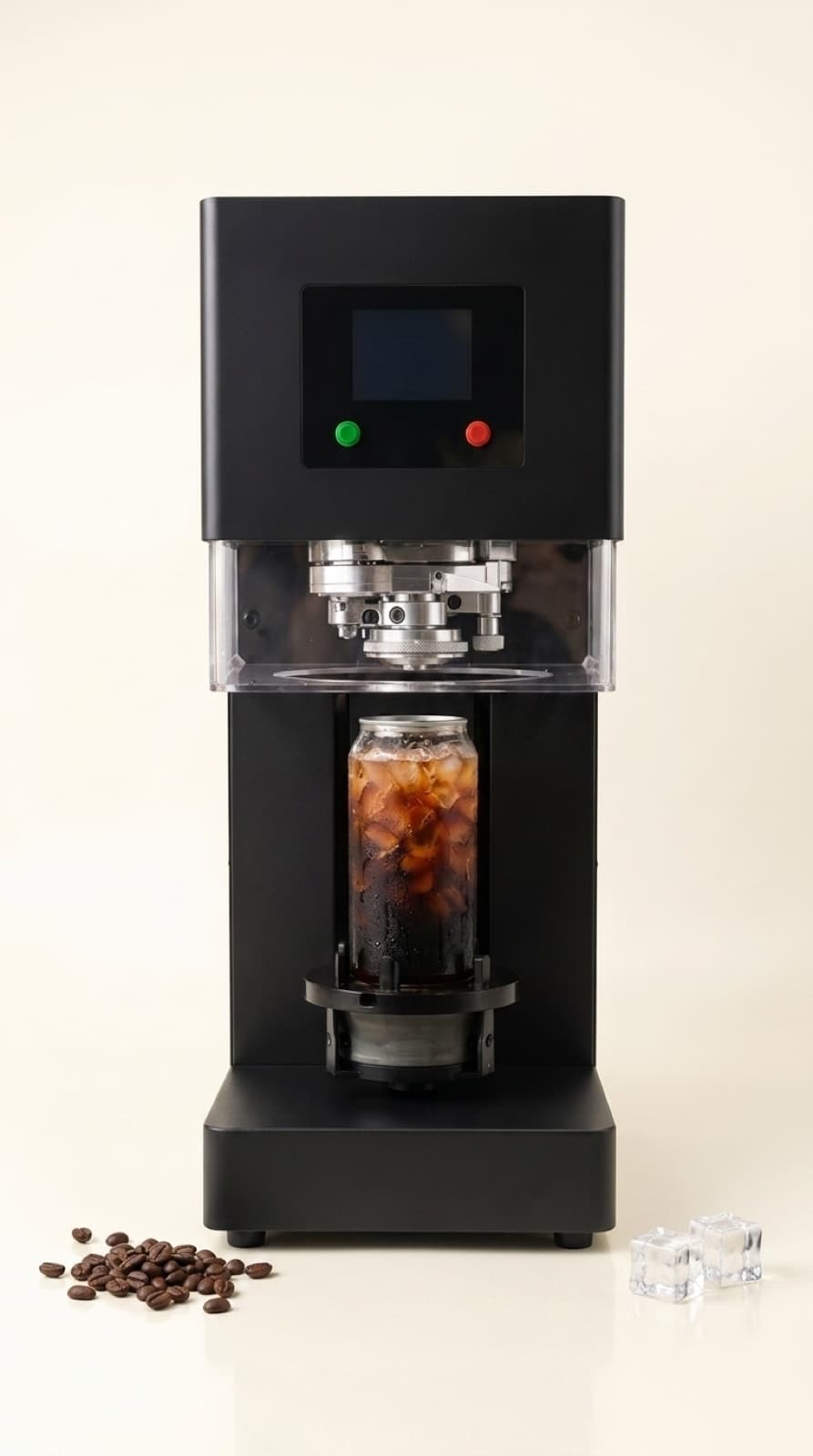
Cafés can sell their own canned cold brew with a countertop can sealer and empty 16oz cans: brew as usual, chill, fill, seal, date the can, and keep it refrigerated. Treated as fresh product, house-canned cold brew keeps its quality for about a week in the fridge and turns your existing batch into a grab-and-go line.
Why can cold brew you already brew?
You already make the product. Cold brew is batched, stable across a shift, and served cold, which makes it the single easiest drink to move from the tap into a sealed can.
A sealed can travels. The customer who buys one iced coffee at the bar buys a second one for the afternoon, a four-pack for the office, or one from the fridge on the way out. None of that happens with an open cup.
What equipment do you need to can cold brew?
The full setup is smaller than most espresso grinders. You need a countertop can sealer, empty cans with lids, and fridge space. Canned machines start at $1,799 for the one-button automatic, with free shipping and Affirm or Klarna at checkout, and every one of them seals a clear PET can in a few seconds.
Cold brew usually goes in the 16 oz can, which runs under a dollar each by the case and drops on subscription volume. The same machine also seals 4, 8 and 12 oz on the same seam, which is how a cold brew program grows into iced tea, lemonade, and espresso shots without buying anything else.
Clear cans matter for cold brew specifically: the color tells the customer what it is before they pick it up, and a nitro-style cascade or an oat milk layer does the marketing for you. The seal keeps that pour intact: Canned machines hold the can still and rotate the seaming head around it, so a layered drink is not stirred back together the moment you seal it.
How long does canned cold brew last?
House-canned cold brew is fresh product, not shelf-stable product. Sealing the can keeps oxygen out and carries your fridge life, it does not replace refrigeration. Plan around these windows:
| Product | Storage | Quality window |
|---|---|---|
| Black cold brew, canned and refrigerated | Fridge, 40°F or below | 7 to 10 days |
| Cold brew with milk or alt milk, canned | Fridge, 40°F or below | 3 to 5 days |
| Any canned drink left at room temperature | Counter | Treat as same-day |
Conservative quality windows for unpasteurized, refrigerated product. Date every can and follow your local health department's rules.
Is it safe to can cold brew without pasteurizing?
Yes, when you treat the can like a to-go cup with a better lid: keep it cold, date it, and sell it inside the windows above. What you cannot do is treat an unpasteurized can as shelf-stable. Room-temperature, low-acid drinks are where real risk lives, so refrigeration is the rule that carries everything.
Milk-based recipes deserve the most respect: shorter windows, strict fridge discipline, and a clear sell-by date on the can. Our food safety guide covers the details.
What is the margin on a can of cold brew?
Example math on a $6.50 can: the 16 oz can and its lid cost under a dollar, less at volume, and 16oz of house cold brew usually lands between 60 cents and $1.20 in ingredients. That puts product cost around $2 and gross margin around 70 percent, in line with your bar drinks but without the labor of making each one to order.
Six cans a day at that margin adds roughly $800 a month in gross profit, which is why the machine tends to pay for itself inside a season. Run your own numbers in the payback calculator on the homepage.
Q.Can I can nitro cold brew?
Not on this machine. Nitro pours rely on gas that needs brewery-grade equipment to can. Still cold brew, including oat milk lattes and sweetened recipes, cans perfectly.
Q.Do I need special cans for cold brew?
No. The same blank clear PET cans work for cold brew, lattes, matcha, and teas. Pick the size that fits the drink, from 4 oz up to 16 oz. One seam standard means every size runs on the same machine.
Q.Should I label my canned cold brew?
Yes: at minimum the drink name, sell-by date, and a keep-refrigerated note. Blank cans take stickers or printed labels, or you can order custom printed cans with your logo once a recipe earns a permanent spot.
Q.How many cans should I start with?
One case. A case of 16 oz cans is 100, which at even four to six cans sold a day is a two to three week supply. That is enough to learn what your fridge actually moves before you commit to volume pricing or add a second size.
Ready to pour your first can?
Countertop sealers from $1,799, shipping free on every model. Add a case of blank cans in any size and start the day it lands.